Showing posts with label GDP. Show all posts

Friday, 29 June 2012

Economy and Realty at glance- June 2012


GDP at a nine year low of 6.5%, high inflation at 7.55%. Ironically, in the fight between taming inflation and propelling growth, we are losing out on both


- Revenues of top-25 realty companies declined 9.30% in Q4FY12, mainly on account of low sales off-take due to higher prices and higher mortgage rates.

- The Realty Index on Bombay Stock Exchange (BSE) has dropped by more than 26% during the last one year compared to a 10% fall in the Sensex during the last fiscal year. In order to bring back the enthusiasm of the investor community into the sector, real estate companies will have to focus on factors such as improving cash flow position, lowering inventory, reducing debt and increasing profit margins

- RBI in its mid quarter review of monetary policy in June reaffirms that cheap interest rate is a far-fetched expectation in the wake of high inflation rate

- During the March 2012 quarter, interest cost as a percentage to sales stood at 15% compared to only 8% reported during the March 2010 quarter

- Although international crude oil price has declined by 20% since the beginning of the last fiscal year, the price of domestic fuel has gone up because the depreciation in Indian currency against USD by 25% during the same period has made import of crude oil expensive

- The Indian Rupee has depreciated by 18%, 8% and 32% against the British Pound, Euro and Yen respectively. Hence, a stubbornly high inflation rate will defer a lower interest rate regime

Wednesday, 31 August 2011

Growth expected in the 2nd half of 2011!!


A Chief economic adviser predicts substantially by saying that the Indian economy will accelerate in the coming second half of current fiscal year!! He called this as a possibility even after the dead effect of the GDP growth of 7.7% in the first quarter of this year.
Though he has predicted the growth to be evident, but he has even claimed that this growth is not going to be very high.
He has asked everyone not to keep extremely high hopes for the coming quarter but he wants to be optimistic for the third and the fourth quarter, expecting a substantial rise.
He said, the economy grew only by 7.7% in the April to June quarter as the manufacturing sector had a poor performance in that period, while in the previous year there was an 8.8% growth in the same period. In the quarter ending of June, 2012, the growth in manufacturing sector had dipped to 7.2%, compared to the 10.6% growth in the previous year.

Thursday, 10 March 2011

India – A tax haven?

Infrastructure investment and social sector programmes have so far been the interests of the two UPA Governments to increase spending.


This is entirely understandable, given the glaring deficiencies in both areas; but from the perspective of fiscal rectitude, there is the affordability question to be considered.

If things go to plan, the reduction of the ratio proposed by the Finance Commission for 2014-15 will be achieved next year -- three years ahead of target. But the task of fiscal correction has barely begun.

Sources reveal that the revenue foregone last year on account of tax concessions and incentives was Rs 79,554 crore (Rs 795.54 billion) on corporate income tax -- mainly accelerated depreciation, software technology parks, etc. --  and on personal income tax a further Rs 36,186 crore (Rs 361.86 billion) -- mostly long-term savings.

Excise concessions cost Rs 170,765 crore (Rs 1,707.65 billion), while customs concessions had the biggest bill: Rs 2,02,240 crore (Rs 2,022.40 billion).
The total bill -- Rs 4.89 lakh crore (Rs 4.89 trillion) -- was nearly 80 per cent of the tax collection in 2009-10!

The peak income tax, for both companies and individuals, could then be no more than 22%. That would make India a tax haven and there would be much less incentive to take money out of the country; if the incentives work, tax revenue would actually climb as people report incomes more honestly.

Sources also reveal the second transition waiting to be achieved is on the subsidy front. The central subsidy bill, mostly on food, oil-related products and fertiliser, is slated to be Rs 1,43,570 crore (Rs 1,435.70 billion) next year.

The Economic Survey cites research, which suggests that between 40% and 55 % of foodgrain meant for the poor is pilfered.

Taking the budgets for all these, every one of about 50 million families that are below the poverty line could be given Rs 3,000 every month as a cash transfer -- better than what NREG offers, and enough to bring all of them above the poverty line, at no extra cost to the government.

India could be transformed into a tax haven, and a land without absolute poverty. Both dreams can become reality if managed and with the help of our Finance Minister considering the growth of the poor and the disabled.

Source: http://www.rediff.com/business

Thursday, 20 January 2011

The world's fastest growing economies


If you think that China is the world's fastest growing economy, think again. However, among the major (or large) economies, China does remain the fastest growing economy. But if you take smaller nations too in the list, China slips down the list.


1. Ghana: 20.146%
Many economists believe that Africa is the next boomtown. Several African nations are now growing at a rapid pace, trying to make lives better for their people. None more so than Ghana. For quite a long time, Ghana received many an unflattering adjectives to describe its economy: 'worst managed', 'disastrous', etc.  However, the small African nation has since then come a long way and is the world's fastest growing economy today.
Ghana's economy is growing at a blistering 20.15 per cent, says Economy Watch. It's a $23.4-billion economy.


2. Qatar: 14.337%
With a GDP growth rate of 12.337 per cent, Qatar is the world's second fastest growing economy, says Economy Watch. It's a $132-billion economy. The economy of Qatar, one of the world's largest exporters of petroleum, is primarily oil-based. High oil and gas prices have boosted the economy of this Gulf state over the last few years.


3. Turkmenistan: 12.178%
Turkmenistan is blessed with the world's fourth-largest reserves of natural gas. The country is also the world's 10th largest producer of cotton. It is the world's third fastest growing nation with a GDP growth rate of 12.18 per cent, according to Economy Watch. It is a $41-billion economy.


4. China: 9.908%
China is the world's fourth fastest growing economy at 9.908% GDP growth rate, and in monetary terms it is of the order of a whopping $6 trillion, says Economy Watch. China, which most economists believe could soon upstage the United States as the world's largest economy, showed some signs of slowing down.However, the rising inflation rates in China are posing a new challenge to the country.China's gross domestic product grew 9.6 per cent in the third quarter as compared to the same period last year. The growth rate slowed down from 11.9 per cent in the first quarter and 10.3 per cent in the second quarter.
5. Liberia: 9.003%
Even though Liberia remains one of the poorest countries on earth, it has shown robust economic activity in the last few years. This African nation is the world's fifth fastest growing economy with a GDP growth rate of 9.003 per cent, says Economy Watch. It is a $1.05 billion economy.


6. India: 8.43%
Economy Watch says that the India, at 8.43 per cent GDP growth rate, is the world's sixth fastest growing economy. India is a $1.5-trillion economy. The India growth story is enviable. Despite plaguing problems, India has emerged stronger and resilient to the global crisis so far. India is expected to be the world's fastest growing economy by 2018, according to Economist Intelligence Unit (EIU), the research arm of the Economist magazine. The growth rate for the first quarter was revised upwards to 8.9 per cent from 8.8 per cent.


7. Angola: 8.251%
Angola is the world's seventh fastest growing economy at a GDP growth rate of 8.251 per cent, as per the Economy Watch report. It is a $ 99-billion economy. Battered by a civil war for close to 25 years, Angola has since then come a long way. Fresh pro-people and pro-reform policies have seen funding from the International Monetary Fund and other global lenders rising. These funds are being utilized to create infrastructure in the nation, thus generating employment and healthy economic activity.


8. Iraq: 7.873%
Iraq is growing at 7.873 per cent, making it the world's eighth fastest growing economy, according to Economy Watch. It is a $93-billion economy.


9. Ethiopia: 7.663%
Economy Watch says that with an annual GDP growth rate of 7.663 per cent, Ethiopia is the world's ninth fastest growing economy. It is a $31.7-billion economy. Over the last two decades, Ethiopia has been noticing the fruits of focused efforts at propelling its economy. Some reforms were undertaken in spite of opposition from various political quarters in the country.


10. Mozambique: 7.548%
Mozambique, a member of the Southern African Development Community, is the world's 10th fastest growing economy with a GDP growth rate of 7.548 per cent. It is a $10.5-billion economy. The SADC free trade plan aims at eliminating tariffs and trade barriers, thus making it more competitive.
Like in India, a majority of the population in Mozambique too is engaged in the agriculture sector.


11. Timor Leste (East Timor): 7.4%
Timor Leste (or East Timor) is the world's eleventh fastest growing economy with an annual GDP growth rate of 7.4 per cent. It's a tiny, $732-million economy.East Timor's economy is mainly driven by the sectors of agriculture and oil and gas.


12. Laos: 7.395%
The GDP growth rate of Laos is 7.395 per cent, making it the world's 12th fastest growing economy. It is a $6.9-billion economy. Agriculture is the most important part of the Laotian economy. Over 80 per cent of the country's working people are engaged in the agri sector. The sector also accounts for about 50 per cent of the nation's GDP.


Source :Rediff business

Thursday, 13 January 2011

Quick Primer on Top 5 economies

The gross domestic product (GDP) is one the primary indicators used to gauge the health of a country's economy. It represents the total dollar value of all goods and services produced over a specific time period - you can think of it as the size of the economy which indicate a sign of a health economy
Let’s take a look at the Top 5 economies


  1. US  - $14 trillion
  2. China -  9$ trillion
  3. Japan - $4 trillion      
  4. India  - $3.5 trillion    
  5. Germany - $3 trillion

India is on the 4th position which is a positive indication regarding the growth of Indian economy.
These are GDP’s numbers at purchasing power parity – a  mechanism of making different countries output comparable. The next five largest economies are UK, Russia, Brazil, & Italy.

Source : Anatomy of Froth by Swapnil Pawar


Wednesday, 27 October 2010

Tips on Financial Planning for a Wedding!


Don't Go Bust with Wedding Expenses
In India, weddings are seldom a simple affair. Inability to keep a tight lid on expenses may result in family members resorting to high-cost debt like personal loans and credit cards. To avoid such hassles, you can devise a meticulously planned budget after taking your affordability and preferences into account.

Take Budgetary Vows: The challenge lies not in drawing up a budget, but in sticking to it.

Trim The Frills: While devising a budget, make a list of areas where cost-cutting can be carried out and the aspects where compromise is a strict no-no for you.

Learn The Slow Waltz: You can shop for the traditional bridal gold and diamond jewellery well in advance. Also, you can purchase in a staggered manner so that you even out the impact of a price rise
Get Smart With The Trousseau: Planning a trousseau can be done intelligently where you need to have a list of all ‘must haves’ and then lace it with frills if budgets permit.

Dream Décor: This is one area, which along with food, accounts for almost 50% of the wedding expenses. But it’s also easier to cut corners here as compared with the trousseau, make-up or even jewellery. You can make subtle changes which can lower your expenses substantially.

Serve Soul-Stirring Food : Finally, when it comes to food, don’t try to capture the entire globe on a single plate, people actually look forward to relish some local cuisine at weddings Hence, it’s better to stick to two or three cuisines.


Source :ET

Monday, 25 October 2010

Higher rates can adversely impact your Fixed Deposits!


BANKS are quick to lower fixed deposit (FD) rates when the interest rates fall, but they take their own sweet time to raise rates when the interest rates rise. How many times have you heard this refrain from someone, especially a retired aunt or an uncle, in the recent past? With living expenses soaring each day, most investors, especially those who swear by FDs and other relatively safer avenues like company deposits and mutual fund (MF) schemes, are in a fix. The expenses may mount, but their interest income remains steady.

INTEREST RATE SCENARIO
The Reserve Bank of India (RBI) has started raising the policy rate since February in its effort to contain inflation. This means, interest rates — the key variable to watch out for a fixed income investor — is surely north-bound, at least, in the short term. What do you do in such a scenario? Consider this: you can’t lock the money in long tenure FDs because you can’t take advantage of rising interest rates.

SHORT-TERM INVESTMENTS
If you are looking to park your money for less than a fortnight, choose a liquid fund.
The liquid-plus option is more suitable for an investment horizon of more than a fortnight. These funds can give better tax-adjusted returns than saving bank accounts. However, don’t treat these funds as investment avenues. Before investing, take a look at exit loads charged by the schemes, if any, as exit loads erode returns.

MEDIUM-TERM NEEDS
You can consider company deposits and Fixed Maturity Plans for your medium term investment needs. Company deposits pay a little better than bank FDs, but they are more risky. Always look at the credit rating of the company and don’t invest more than 10% of your debt portfolio in a single company. Also, don’t invest in deposits over a year, say investment experts. Remember, the yield on an FMP is a function of the credit quality of the papers in the portfolio and the tenure. One can expect better post-tax yield on an FMP than a corporate FD of similar credit quality for equal tenure.

LONG-TERM INSTRUMENTS
In a rising interest rate scenario, the first thing most advisors will ask you is to stay away from long-term debt schemes. With inflation tapering off, long-term rates are likely to ease a bit. If you do not want to take credit risk, you can look at gilt funds that invest in government securities.

Source : ET

Thursday, 14 October 2010

Is there a link between market boom & cricket victory?


The 484-point surge in BSE benchmark Sensex on Wednesday coincided with the triumph of Indian cricket team against Australia -- thus corroborating claims of a correlation between trends in stock markets and cricket field.

Though it was purely a coincidence, many analysts believe there are some sentimental relationships between cricket and Dalal Street.
A recent research by Monash University in Australia showed that when India's cricket team loses one-day matches, stock markets take a beating.
Research by economists Russell Smyth and Vinod Mishra of Monash University suggested that the performance of the Indian cricket team in one-day matches can significantly impact the fortunes of the Indian stock market.

In the second test match, Tendulkar (53 not out) added a half century to his first innings double ton and capitalised on the foundation laid by debutant Cheteshwar Pujara (72) as India easily surpassed the target of 207 in the final session of the last day.
After trading in a narrow trading range for the past 7 days, the bulls were back with a bang on Dalal Street on Wednesday.

The BSE Sensex soared over 450 points and the NSE Nifty rose by over 140 points, among the biggest single-day gains in recent memor.


Source: Rediff

Wednesday, 13 October 2010

Meet the World’s youngest CEO, Mr.Suhas Gopinath


When 14-year-old Suhas Gopinath started Globals Inc ten years ago from a cyber cafe in Bengaluru, he didn't know that he had become the youngest CEO in the world.

Today, Globals is a multi-million dollar company with offices in the United States, India, Canada, Germany, Italy, the United Kingdom, Spain, Australia, Singapore and the Middle East and has 100 employees in India and 56 abroad.Among the several honors that have been bestowed upon this young man, the most prestigious is the invitation to be a member of the Board of the ICT
Advisory Council of the World Bank...

In 2007, the European Parliament and International Association for Human Values conferred 'Young Achiever Award' on him. He was also invited to address the European Parliament and other business dignitaries assembled in the EU Parliament. He is also recognized as one of the 'Young Global Leaders' for 2008-2009 by the prestigious World Economic Forum.

Suhas is the youngest member ever in the World Economic Forum's history. The other members include the Louisiana governor Bobby Jindal, Hollywood star Leonardo DiCaprio, musician A R Rahman, Prince of Brunei, etc.


Source: Rediff

Tuesday, 12 October 2010

One of the youngest HNI’s in the world - Mark Zuckerberg

Mark Elliot "Zuck" Zuckerberg (born May 14, 1984) is an American entrepreneur who co-founded the social networking site Facebook. Zuckerberg co-founded Facebook with fellow classmates Dustin Moskovitz, Eduardo Saverin, and Chris Hughes while attending Harvard. He is a billionaire due to his 24% share of Facebook.

Zuckerberg launched Facebook from his Harvard dormitory room on February 4, 2004.The idea came to him because the Harvard administration was unable to implement an online directory in response to student requests.

Mark started Facebook with the intention of bringing the youth to a place where they can share, learn and have a good time. Mark’s success didn’t take too long & soon Facebook became very popular throughout the world making Mark one of the youngest HNI's in the world. Mark has become a great inspiration for everyone in this world.

Source:Wikipedia

Thursday, 7 October 2010

Do you study the four stages before selecting your best sector to invest?

The importance of industry analysis is slowly dawning on the Indian investor as never before.Previously, investors purchased shares of companies without concerning themselves about the industry it operated in.It worked then as India was a seller’s market but now there’s immense competition that’s coming in so it becomes important for you to have the basics right before you take a step.

Cycle: The first step in industry analysis is to determine the cycle it is in, or the stage of maturity of the industry. As it gives you a better picture of what you can expect from it.
Nascent Stage: At the first stage, the industry is new and it can take some time for it to properly establish itself. In these early days, it may actually make losses or profits. At this time there may also not be many companies in the industry so it becomes very important to do a detailed study.
Growth Stage: Once the industry has established itself it enters a growth stage. As the industry grows, many new companies enter the industry. At this stage, investors can get high reward at low risk since demand outstrips supply.
Maturity Stage: After the halcyon days of growth, an industry matures and stabilizes. Rewards are low and so too is the risk. Growth is moderate. Though sales may increase, they do so at a slower rate than before. Products are more standardized and less innovative and there are several competitors.

Source: Rediff

IMF sees India booming at 9.7% in 2010!


The International Monetary Fund has projected the Indian economy will grow by 9.7 per cent in 2010 and 8.4 per cent in the next fiscal, driven by robust industrial production and macro-economic performance.

"India's macroeconomic performance has been vigorous, with industrial production at a two-year high. Leading indicators -- the production manufacturing index and measures of business and consumer confidence -continue to point up," the IMF said.

According to IMF Growth is projected at 9.7 per cent in 2010 and 8.4 per cent in 2011, led increasingly by domestic demand. Robust corporate profits and favorable external financing will be encouraging investments.
According to the World Economic Outlook report, growth in emerging Asia economies stands at about 9.5 per cent, with robust demand from China, India, and Indonesia benefiting other Asian economies.

Source: Rediff

Friday, 1 October 2010

Amazing innovators from Rural India!!!

As the Indian economy continues to progress with time, one cannot ignore the fact the rural India has always been the backbone of various sectors including food. Here’s an interesting insight into the lives of these five amazing innovators who have made a difference in the rural lifestyle, thereby helping it grow at a much faster rate.

1.Uddhab Bharali

Uddhab Bharali is a serial innovator who has designed and prototyped around 85 devices for different purposes.

He first developed the polythene-making machine in 1988. Some of his innovations include:
Pomegranate De-seeder: It separates the outer cover and thin inner membrane without damaging the seeds. It has a capacity of deseeding 50-55 kg of pomegranate fruits per hour. The machine has been exported to Turkey and the United States of America.
Arecanut Peeler: Annoyed by the injuries caused while peeling the areca nuts manually, he developed an areca nut peeling machine with a capacity of peeling 100-120 nuts per minute.
Cassava peeler: It is a portable electric machine that can process up to five kg of cassava per minute. NIF facilitated the technology licensing on non-exclusive basis to a Guwahati based entrepreneur. One unit has even been sold to a customer based in Kenya.

2.Bachubhai Savjibhai Thesia

Bachubhai is known as 'Khopadee' (brains) in this small township. To many he may appear a persistent explorer of crazy ideas, but his reputation as a serial innovator has spread far and wide.
Doing away with the steering wheel, Bachubhai (58), an inventor and innovator, has developed a lever operated farm machine capable of doing most agricultural operations.

3.Dhirajlal Virjibhai Thummar

Here’s a man who created a new wilt resistant groundnut variety when In 2004, he saw a complete crop failure as the whole field got infested with the stem rot disease resulting in wilting.
'Dhiraj 101', the new variety of groundnut, selected from the GG 20 variety is early maturing and is resistant to wilt due to stem rot. At 3,200-3,500 kg per hectare, the yield is also higher than that of the locally cultivated varieties (GG 20 & GG 2).

4.Pandharinath Sarjerao

A farmer from Maharashtra, Pandharinath Sarjerao More developed an affordable, semi-automatic transplanter for timely sowing of onion seedlingsThe task of transplanting onion seedlings manually is time consuming and labour intensive.
Pandharinath's onion transplanter is a tractor drawn semi-automatic unit. It can perform three functions at a time viz. transplanting the onion, applying the fertilizer and making the irrigation channels.

5.Mushtaq Ahmad Dar

Mushtaq Ahmad Dar (28), a young innovator from Kashmir, has developed a machine that can crack walnuts and peel the green ones.He has also made a portable climber that can be used to climb trees and poles. Presently, he is developing a machine for cracking almonds.
Looking at their achievement s we can surely say that innovations takes place in the mind of those who care to do things for others, the people with vision and passion to contribute something for the society.


Source: Rediff

Thursday, 30 September 2010

The Richie Rich's of India!!!

India's rising stock market and a booming economy that's expanding by 8.5 per cent have boosted the net worth of India's richest people, according to the latest Forbes' India Rich List.The combined net worth of India's 100 richest people is $300 billion, up from $276 billion last year. This year, there are 69 billionaires on the India Rich List, 17 more than last year.

Mukesh Ambani, head of Reliance Industries, has topped the latest Forbes' India Rich List with a net worth of $27 billion, for the third consecutive time. Steel magnate Lakshmi Mittal, remains at No. 2 with a net worth of $26.1 billion. However both are less well off than they were a year ago.

The 100 richest Indians have a combined wealth of $300 billion, an all-time high and more than the combined GDPs of all the other nations in South Asia put together.

Let us take a look at the top 5 richest Indians:

1.Mukesh Ambani
Reliance Industries chairman Mukesh Ambani is the richest man in India with $27 billion in net worth. At $27 billion, Mukesh Ambani is as rich as Larry Ellison, the third richest American. Bill Gates at $54 billion is twice as rich as Ambani.

2.Lakshmi Mittal
Owner of ArcelorMittal, this business tycoon has stake in British soccer team QPR. Mittal is looking to invest in Brazil, India and West Asia. He owns 12-bedroom mansion in London's posh Kensington area.

3.Azim Premji
The software czar's company Wipro has done well over the last one year, recording a significant turnaround making Azim Premji the third richest Indian.

4.Shashi Ruia
The Ruia-owned Essar Group is looking for major expansions in all its businesses, including steel, oil and power. Essar Oil bought 50 per cent in Kenya Petroleum Refineries in July and is negotiating with Royal Dutch Shell to acquire three refineries. The Ruia’s stand at 4th rank.


5.Savitri Jindal
She is the non-executive chair of O P Jindal Group who took over the reigns of the steel and power conglomerate founded by her late husband Om Prakash in 1952.Shes in the 5th richest Indian.

Source: Rediff

Do you have what it takes be an entrepreneur?

The economic scenario in India is quite an attraction for the ‘budding entrepreneurs’. A lot of young professionals on the block are more and more inspired to start up their own ventures, to be kings of their own castles, so to say, to be their own boss.
Entrepreneur is not a designation, entrepreneur is a mentality. It’s the way you think, not the title that you own.

Here are three major questions you need to have answered in the positive to know whether there is an entrepreneur in you waiting to be found:

Are you self driven? An entrepreneur is so because he takes initiative, without which an enterprise does not come into existence. Do you go out and greet people, talk to them, discuss with them, motivate them, appreciate them on your own accord? An entrepreneur has skill with people. He has the charisma, confidence and control over his intentions and influence.

Are you pushy? An entrepreneur does not take no for an answer. He would ask again, wait around, and look for new ways of entry, until his work gets done. He would you not hesitate to ask for favours quite out of the expected or do things that normally people would pass off.

Do you take responsibility?
It is easier to take risks but an entrepreneur takes responsibility. He owns up for his actions and takes full credit of the consequences of what he does. He is fully aware of his intentions and because he makes it clear, he takes full responsibility in creating results.

Source: Economic Times

Hearty Congratulations!!!

We are glad to announce the winner of India Wealth Report contest, Congratulations Mr.Vineet Parolia for being the first one to come up with the correct answer & Win a Free Comprehensive Financial Plan from Karvy Private Wealth.

We would like to tell everyone that we are going to have many more such contests in the coming days.


Best Regards
Karvy Private Wealth
Get more out of life!

Wednesday, 29 September 2010

How India could be a superpower?

India is fast emerging as the next superpower. That is the thought that transpired at the two-day 37th National Management Convention held at the Oberoi Grand in Kolkata last week.
On the first day of the convention, eminent panelists spoke at length on India, the opportunities that it throws up and challenges that it poses.

Here are some important quotes by personalities that adorned the event, on how India could become an economic powerhouse.

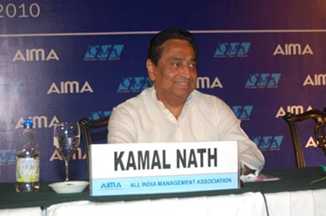
1.Kamal Nath (Ministry of Road Transport and Highways)

According to the Mr.Kamal Nath, India should ensure that we have aesthetically pleasing roads and more importantly, roads that are safe. We just can't afford to take chances with human lives.


2.Nandan Nilekani, chairman, Unique Identification Database Authority of India

India is living an information technology age at the moment. India has achieved a significant lot over the past few years. Be it railway reservation, mobile connectivity and stock markets trading, IT has started ruling our lives and it is indeed an encouraging phenomenon.
According to Mr. Nandan the two most important aspects of making any IT or for that matter any other project successful is passion and enthusiasm.

3.Sanjiv Goenka, RPG group

This century is undoubtedly going to be India's century. India, as an economic power, has come a long way. To move from a single-digit growth to near double-digit growth isn't easy and India has achieved that rare feat. Indian markets are more developed now, its consumers more mature, discerning and sophisticated.

4.B. Muthuraman,Vice Chairman (Tata Steel)

If India has to meet its potential as one of the foremost nations of 21st century, then it must focus on getting its education and healthcare system right.
India has a lot of things going for it. Our economy is growing at fast pace, and we are pioneers in many sectors like IT. But, if we have to meet our true potential, we must get our education and healthcare system right. If these aspects are put into place then no one can stop us from being a super power.


Source: Rediff

Some people who changed how India conducts business!

Here is a list of people who in their unique way changed how India conducts business today. Some of them may not be a typical 'management guru', but without their acumen their companies would not be what they are today.

1.Manmohan Singh
He is the man behind India's economic reforms. In 1971, Singh joined the government as an economic advisor to the ministry of foreign trade.
Humble and self-deprecating to the core, Singh is known to underplay the achievements of his illustrious career.
He won the Euromoney finance minister of the year award in 1993 and the Asiamoney finance minister of the year award twice, in 1993 and 1994. He became the undisputed father of economic reforms in India.

2.Ratan Naval Tata
Ratan Tata is ranked 12th among the world's 50 best business thinkers. Chairman of Tata Sons, the holding company of the Tata Group has steered the company with diversified interests to scale new peaks.
He was recently ranked the most trusted name among businessmen in India in a list compiled by Reader's Digest.Ratan Tata was awarded the Padma Bhushan in 2000.

3.Vijay Govindarajan
Vijay Govindarajan is one of the world's leading experts on strategy and innovation. He is the Professor of International Business and the Founding Director of the Center for Global Leadership at the Tuck School of Business at Dartmouth College. Govindarajan has ranked among the top five most respected 'executive coach on strategy' by Forbes.

4.Vijay Mallya
Vijay Mallya took over as chairman of United Breweries Group in 1984. Since then, the group has grown into a multi-national conglomerate of over sixty companies.
He was the man who brought back the sword of Tipu Sultan to India and bought the belongings of Mahatma Gandhi in a New York auction.He established Mallya Hospital in Bengaluru, and helped to fund the Mallya Aditi International School, a private school in the city.

5.Shiv Khera
Shiv Khera's story is truly inspirational. Three decades ago, he used to wash cars and sell insurance policies in the United States. Today, he has a multi-million dollar empire.
Shiv Khera is the founder of Qualified Learning Systems Inc.
He has established himself as an educator, business consultant and a successful entrepreneur. He is one such Indian who motivates and encourages people to explore their true potential and succeed in whatever they do.

Source: Rediff

Tuesday, 28 September 2010

India would attract more FIIs to boost Infrastructure!


Taking a step forward to develop the government securities and corporate bond markets, the government on Thursday increased the Foreign Institutional investor limit for government securities to $10 billion from $5 billion, for corporate bonds the FII limit has been increased to $20 billion from $15 billion.

In addition, the government has raised the FII cap in bonds floated by companies engaged in the infrastructure business, which will provide much-needed funds for the crucial sector.

According to the Finance minister this move would help the flow of FII fund into debt Markets. It is also believed that increased FIIS in Debt securities would help investment in the infrastructure sector and the development of government securities and corporate bonds markets.

Also Foreign institutional investors have poured about $18 billion (Rs 81,880 crore) in India in stocks so far this year, their highest investment in dollar terms in a calendar year.FIIs' net purchase were worth $17.89 billion in this year till Friday, according to data available on the Securities and Exchange Board of India website.

Source: NDTV/Rediff
Photo: Topnews.in

What are Foreign Institutional Investors – FIIs?


The term is used most commonly in India to refer to outside companies investing in the financial markets of India.

International institutional investors must register with the Securities and Exchange Board of India to participate in the market. One of the major market regulations pertaining to FIIs involves placing limits on FII ownership in Indian companies.
What you must know about FIIs is that, owing to the much stable global markets, India has started experiencing robust inflows of FIIs recently.

Photo : Forum4finance